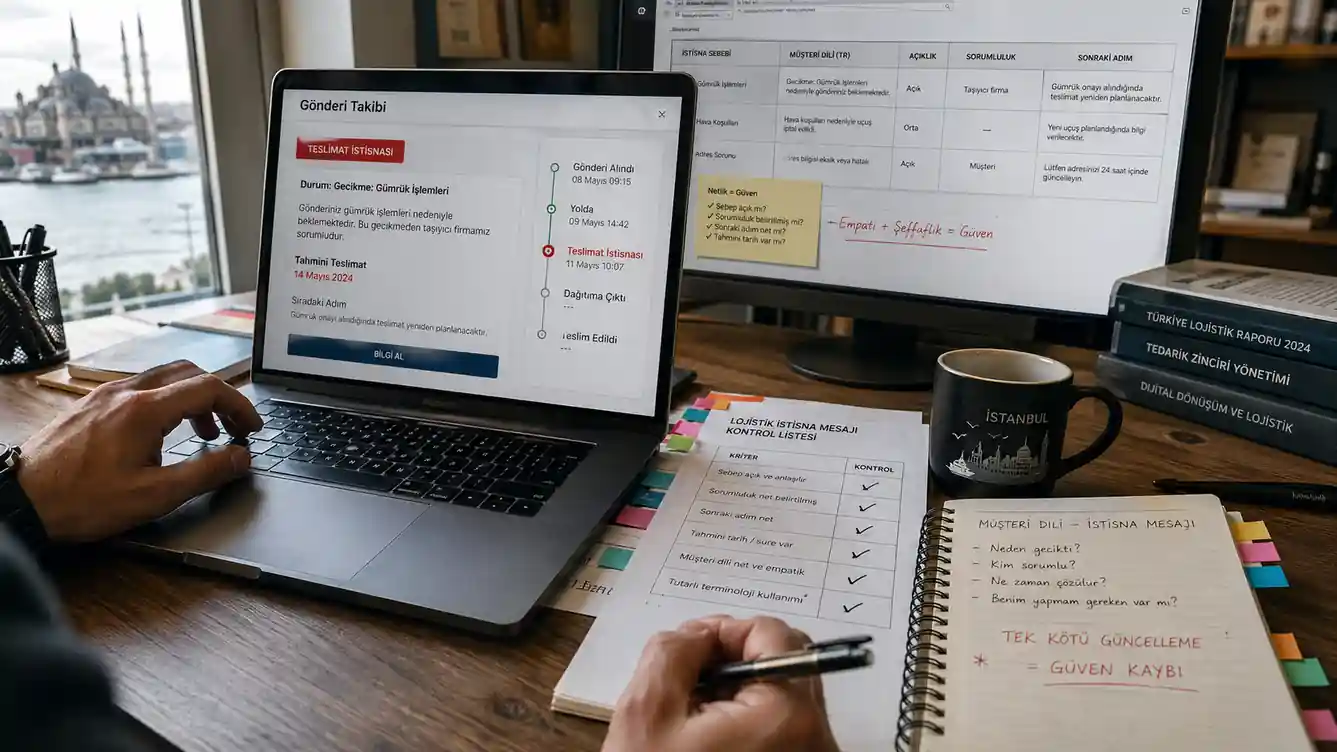
Your Parcel Is Delayed. Your Turkish Message Makes It Worse.
Delivery exception language must explain delay, responsibility, and next steps before the customer loses trust.
Turkish Logistics Exception Message Localization: Why Delivery Trust Breaks After One Bad Update
The customer checks the delivery page. The parcel is late.
Then the Turkish status message appears.
“Teslimat gerçekleştirilemedi.”
The sentence is correct. But it creates uncertainty instead of clarity — a common failure when messaging is handled outside a structuredTurkish localization strategy.
What Actually Breaks
Exception messages are treated as system output. But they are customer communication.
That is where teams rely on literal translation instead ofprofessional Turkish translation workflows adapted for user-facing decision moments.
A label explains status. A localized message explains reality.
Why Turkish Changes the Trust Problem
Turkish users expect clarity in responsibility and next steps. Passive phrasing without explanation feels evasive.
The message must answer: what happened, who acts next, and when resolution is expected.
This is why exception flows must pass structuredtranslation quality assurance.
The Business Damage You Misread
Poor messaging increases support volume, reduces repeat purchases, and damages brand trust.
Customers do not contact support because of the delay. They contact support because the message did not explain the delay.
This becomes even more sensitive in cross-border logistics where communication intersects withsecure handling expectations.
What Proper Localization Does
Each exception scenario must be localized individually: delay, failed attempt, customs hold, address issue, pickup, return, transfer.
One generic failure message is not a system. It is a problem multiplier.
What to Audit
Map every status message and test whether it reduces uncertainty immediately.
If the user hesitates or contacts support, the message failed.
Customers forgive delays.
They do not forgive unclear communication.

Process authority: review the language before customers, reviewers, or stakeholders expose the weakness.
FAQ
Why are logistics exception messages important?
Because customers read them under stress. If the Turkish message is vague, they assume the worst and contact support.
What messages should be localized carefully?
Delivery delays, failed delivery attempts, customs holds, address issues, pickup notifications, return processing, and carrier handover messages.
Can better Turkish messages reduce support volume?
Yes. Clear exception messages reduce repeat questions, prevent panic, and help customers understand next steps without contacting support.
Fix the Delivery Messages That Create Support Tickets
We localize Turkish logistics exception messages so customers understand what happened, what happens next, and when to act.
Request Logistics Message Review