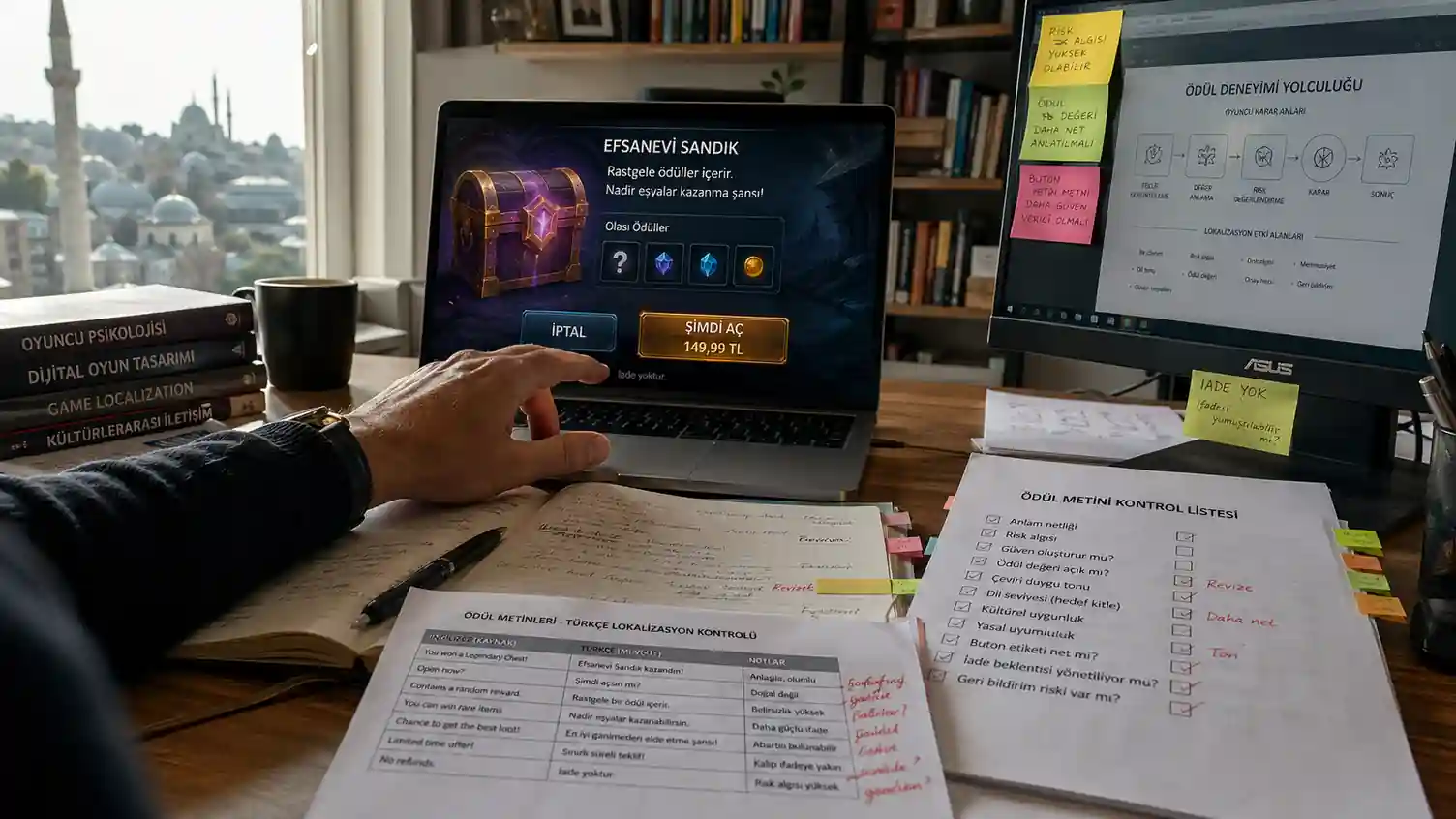
The Player Wants the Reward. The Turkish Copy Makes the Purchase Feel Wrong.
Gaming monetization depends on timing, trust, reward clarity, and emotional tone—not literal translation.
Turkish Gaming Localization: Why Monetization Friction Starts With Reward Language
The player is engaged. The event is live. The reward looks attractive.
Then the Turkish copy creates friction.
The reward name feels vague. The urgency sounds pushy. The confirmation does not reassure.
That is not just a monetization issue. It is a failure in how the game economy is handled within a properTurkish localization strategy.
What Actually Breaks
Monetization copy is often treated as UI text. That is the mistake.
Reward strings, purchase prompts, and event banners are decision triggers. They require more than literal translation.
This is where teams rely on standard delivery instead ofprofessional Turkish translation workflows that adapt meaning to player behavior.
A translated string can describe value. A localized string makes the player act.
Why Turkish Changes Player Reaction
Turkish player-facing language must balance energy and trust. Too much hype feels manipulative. Too little feels irrelevant.
Consistency matters even more. If reward names or currencies shift terminology, players hesitate.
This is why monetization copy must go through structuredtranslation quality assurance, not just translation.
The Business Damage You Misread
Low conversion is often blamed on pricing or economy balance. But if the Turkish copy fails to create clarity and trust, every offer underperforms.
Players do not reject the game. They reject the moment of purchase.
In many cases, hesitation is not about value — it is about perceived risk, especially when payment and data handling are involved undersecure transaction expectations.
What Proper Localization Does Instead
A strong workflow maps the game economy and localizes copy based on player psychology: reward, scarcity, progress, confirmation.
Purchase confirmation must be explicit: what is bought, what is delivered, when it applies, and whether the action is final.
The goal is simple: remove doubt without removing excitement.
What to Audit Before Launch
Review reward labels, store items, bundles, timers, and confirmation dialogs.
Check if players understand value instantly. If they hesitate, the language is part of the problem.
Players do not buy because text is translated.
They buy when the reward feels clear, fair, and safe.
Turkish gaming localization should protect that moment.
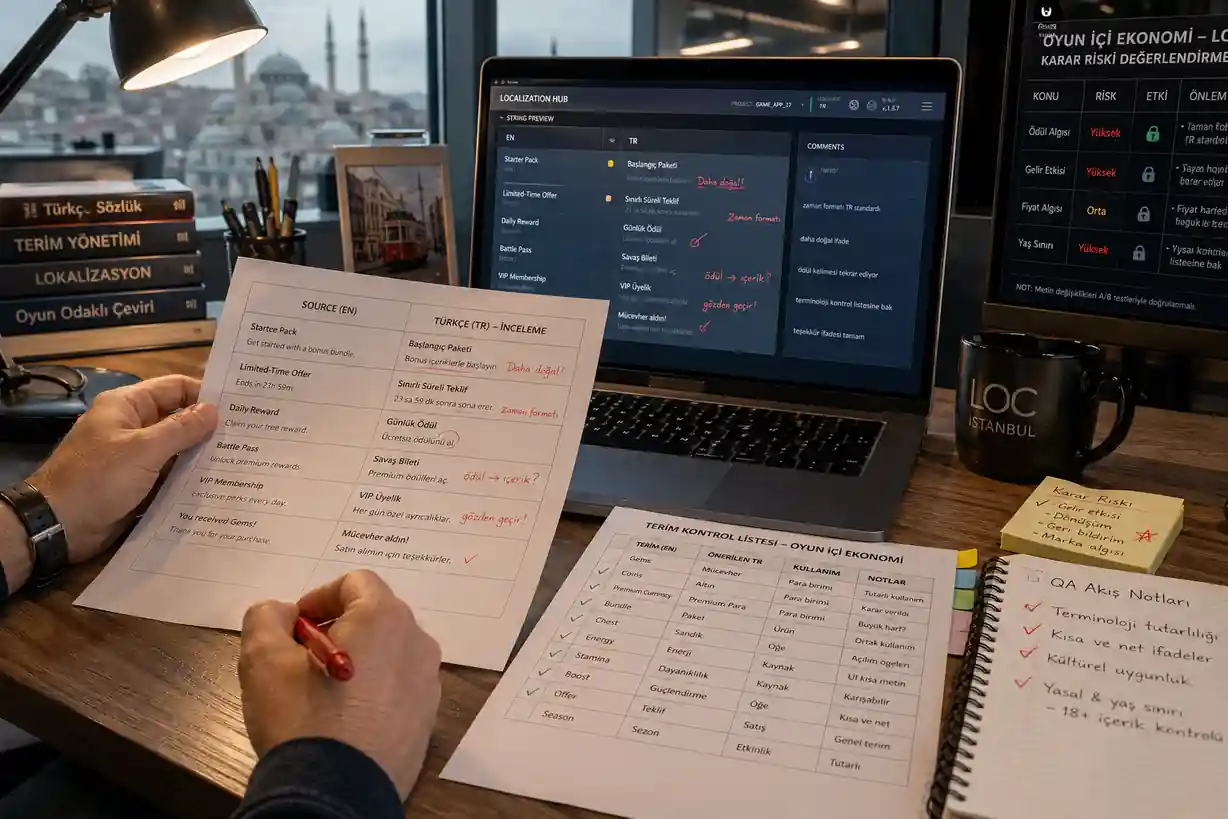
Process authority: review terminology, tone, and decision logic before the market exposes the weakness.
FAQ
Why does reward language matter in gaming localization?
Because players decide quickly. If the Turkish copy makes a reward feel unclear, unfair, or manipulative, monetization drops.
Is gaming localization mostly creative translation?
It is creative, but also systematic. Rewards, currencies, events, store items, warnings, and purchase flows need consistent terminology and emotional logic.
Can Turkish localization affect in-app purchases?
Yes. Reward clarity, urgency, value framing, and purchase reassurance can all influence whether players proceed or abandon.
Localize the Reward Before the Player Hesitates
We review Turkish game monetization copy for reward clarity, purchase confidence, event urgency, and player trust.
Request Gaming Localization Review